


Volume 3, Issue 1, January 2024
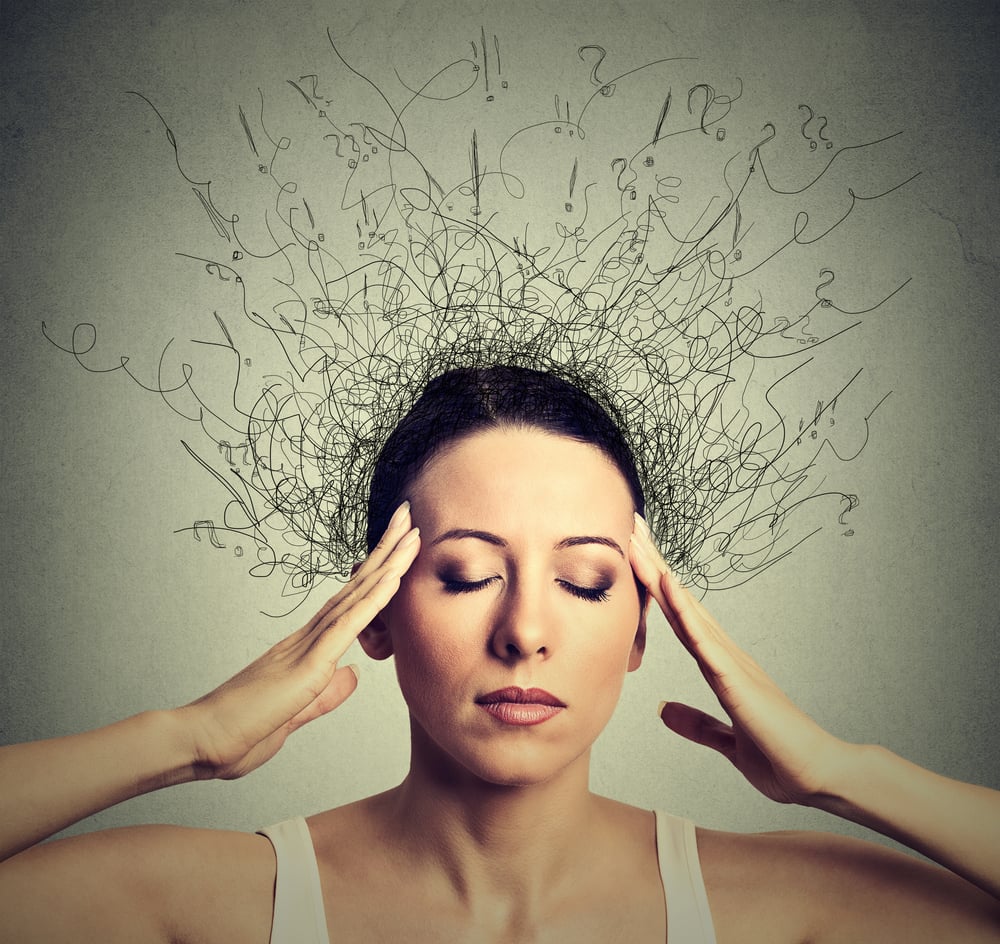
| Photo credit: Getty Images |
Welcome to Volume 3, Issue 1 of The Root.
In order to support our growth, we require a strong network of roots. They anchor us and serve as a conduit for nutrients to help us develop and deliver on our goals.
I am so excited to begin the 3rd volume of The Root. I started this newsletter as a way to stay disciplined as a new entrepreneur as I grew my business, and as a toolkit for myself and others whom I advise and coach. I hope you will find these useful.
This month, I dive into the topic of ADHD in Women. It’s an important topic, and one I learned about last year – with the help of clients and my own children. I realized that many of my own attributes are closely related to ADHD in women – and through this journey, it’s helped me realized how to manage myself, my expectations and my self-worth.
Each month, I aim to highlight books, articles and/or podcasts related to the chosen topic. I hope you will find helpful information to identify and manage burnout before it overtakes your daily life.
Thank you for following along our journey to Aspire to Grow.
Check us out at www.aspiretogrow.co <the .com domain was taken, but I like to think of it as “.co” for co-create>.
Off the Shelf – My Book Pick
Women with ADHD: The Complete Guide to Stay Organized, Overcome Distractions and Improve Relationships, Manage your Emotions, Finances and Succeed in Life by Sarah Davis and Linda Hill
In Women with ADHD: The Complete Guide to Stay Organized, Overcome Distractions and Improve Relationships, Manage your Emotions, Finances and Succeed in Life, Sarah Davis and Linda Hill demystify many of the symptoms commonly seen in women and help us realize how to manage our days, our minds and our lives.
This book was amazing to me. What started out as discovery and research for clients and my newly diagnosed teen, I realized was a rear view mirror of many things I had struggled with or masked during my professional life. I do not want to downplay any of these, as my ADHD symptoms are relatively mild and manageable. But, I do believe this provides insight to many of us who have been undiagnosed through adulthood.

ADHD in Women, How is it Different?
Davis and Hill provide an overview of what ADHD is — a neurodevelopment difference that is biologically based. And, it appears differently in others based on what part of your brain is being impacted or which networks are impacted.
Despite what we’ve been told, ADHD is not a behavioral disorder, although symptoms of emotional response can occur.
Unlike the ADHD presentation in men and boys, presentation in women can be different as a result of the following:
- Hormonal fluctuations (as if they aren’t bad enough on their own? 😆)
- Gendered role expectations
- Internalized symptoms
- Racing minds (vs. outward hyperactivity in men/boys)
- Hypersensitivity Sensory overload
- Migraines
- Anxiety or depression
Many of us suffer with consistent feelings of being inadequate, have chronic stress, low self-esteem and feeling overwhelmed.
Some ways ADHD may manifest in your daily life:
- Time management challenges ( trying to do too much or not enough in a given time period)
- Constant or intermittent feelings of being overwhelmed
- Anxiety or depression symptoms
- Money Management issues
- Focus on details
Women can often feel these without having ADHD, but if knowing these things can help you in any way to understand and feel less shame and more worth, my job is done. ❤️
How Can We Manage?
Many women with ADHD have learned to manage, cope or mask symptoms – but typically are high functioning (but exhausted) super stars.
Davis and Hill suggest the following tips to consider for our physical well being:
- Create healthy eating habits (these help fuel our body and grow new neural networks)
- Build in 3-5 hours of movement/exercise per week
- Limit screen time (extra beyond work (especially at bed time)
- Get sufficient sleep
For our Executive Function, we can try the following techniques:
- Organize daily/weekly tasks
- Use journal, reminder, alarms with detail, planner or calendar
- Break down tasks into smaller detailed steps
- This makes the task more manageable and visually achievable
- Visual aids to help clarify workflow
- Verbal + written instructions for new tasks
- Schedule breaks and transitions between meetings
- Before big or important meetings, I will meditate to reset my mind
Not everyone with ADHD will exhibit Executive Function issues or may exhibit some during times of high stress or task complexity.
As we learn in the podcast below, ADHD exists on a continuum and can be situational.
Emotional Regulation/Rejection Sensitivity Disorder
I won’t discuss Rejection Sensitivity Disorder (RSD) too much here, but I can say this was my biggest a-ha when reading this book.
I had not heard of this before, but have always (since childhood) been referred to as “sensitive” – which can lead to feelings of shame.
This is a reminder that this is how your brain is wired. It is not how you choose to process triggers.
But the good news?
We can learn to understand our brain wiring and understand the triggers to experience less emotional response to situations.
The most important thing about RSD for me is:
- Knowing you aren’t alone in this feeling
- Learning to be kind to yourself and others (and lessen the feeling of shame)
- RSD is real and is associated with your brain function 🤕
- Naming the rejection feeling and learning to avoid the brain hijack and negative self-talk
ADHD Is Your Superpower!
I’d like to leave you with the way ADHD can be your superpower when you are able to manage your symptoms and responses.
NOTE: after listening to the I have ADHD podcast, I realized that this may not be true for all folks with ADHD, that this may vary your ability to manage your daily routines, relationships, etc. – this summary is a possibility if symptoms and responses are managed.
Your brain is uniquely wired to find unique solutions and work with multiple complex concepts (note: you need to follow the self-care above ⬆️to manage your physical and mental energy to do so).
- to be honest, upon self-reflection, I’m not sure I could have been a parent to 6 kiddos (including triplets), had my brain not been wired this way.
Your mind will find solutions, patterns and themes faster than most people. But, be sure to bring them along and be patient and clear on your findings.
While ADHD can sometimes lead to boredom with learned roles/jobs, it’s important to stay focused on tasks and hobbies that ignite your passion and fuel your brain.
ADHD folks can and do well in fast paced environments, creative fields, scientific fields and entrepreneurship — so move over bacon (if you are from the 80s, you’ll know this reference), now there is someone who knows her strengths and her energy zappers).
Stream On: My Podcast Pick:
HBR Women at Work, Conversations about Where We’re At and How We Move Forward
ADHD Is Different for Women

This episode of the HBR Podcast Women at Work: ADHD is Different for Women with Kathleen Nadeau, Kristen Carder and host Amy Bernstein discusses how ADHD shows up differently for women in the workplace.
How Does it Show Up for Us?
While ADHD is a biological/neurological disorder, it is often misunderstood and underdiagnosed in women and girls. It can show up differently between individuals, even those who are related. In fact, girls with ADHD tend to be inattentive (vs. hyperactivity mostly seen in boys) and have learned coping mechanisms to deal with this. At to no surprise, many women are not diagnosed until adulthood.
What is it?
ADHD exists along a spectrum. Nadeau says, “You can have a little or a lot of this thing called ADHD”. Rather than a dysfunctional attentive system, she refers to it as a dysregulated attentional system, one in which focus can differ based on interest or engagement in the situation.
Important Things to Recognize
Nadeau suggests that women with ADHD tend to have a certain bandwidth – which typically as high performers, gets spent at work. Many folks would not know this person has ADHD because they do it all, but the end result is extreme fatigue and exhaustion.
So while we can cope, what is the cost to your physical and mental well being?
Also, one of the largest thought distortions of women and men with ADHD is perfectionism.
Here’s the thing, you can identify this and address it.
Many women with ADHD will appear as the duck gliding across the water, but her feet are paddling super diligently below the surface.
Sound familiar?
How to Manage?
Nadeau, a psychologist and clinical director (and author) at the Chesapeake Center suggests women should “underdo things”. Mostly, women with perfectionist tendencies tend to also have ADHD and create unreasonable standards for ourselves.
She suggests we simplify.
Consider an inventory of your life and determine where the largest stressors are. How could you simplify or make changes to those areas?
Also, Carder suggests to her clients to do “B- work”.
Women with ADHD (and those without it) often strive for “A+ work” at the risk of our mental and physical energy. But as Carder states, a perfectionist’s “B- work” is typically most everyone’s “A+ work”.
This is such great advice that I provide to my clients ALL THE TIME!
In addition, support groups can help. This is tricky, because so many professional women I talked with have fear of sharing their diagnoses at work. Finding trusted peers to connect with can help us feel not alone. And also finding other strong, successful professional women with ADHD can help us feel we are supported.
The Role of Hormones
More research is being presented about the changing role of hormones on the impact of ADHD. Estrogen has a large role in brain receptors for ADHD, anxiety and depression, and throughout our lives (especially puberty, perimenopausal, postmenopausal), we exhibit large hormonal fluctuations.
While HRT may not be a solution for all women (especially those with family history of cancer), other options such a stress management, yoga, meditation, a low glycemic diet (more on this in the podcast!)
Optimally, exercise/movement, diet, stress management and social connection can help.
The Role of Shame and Knowing What We Like
For many of us with symptoms, when we have been diagnosed, we feel shame (and a little relief in my experience). At the same time, I do worry about putting this newsletter into the universe and the impact on my business. ❤️🌿
Nadeau suggests we do not go an announce we have ADHD because the lack of understanding in the workplace.
But instead, she suggestions you consider the following about how you work:
- What are you naturally good at?
- How much structure do I need?
- Do I want to work with others or solo?
- Are short term projects better for you?
- Do you like complexity, intensity and exciting?
To learn more, Kathleen Nadeau has a podcast, I Have ADHD. Above all, know your strengths, your detractors, organize yourself and be mindful of your goals, your energy and your well being.
And know, you are not alone. 🌿